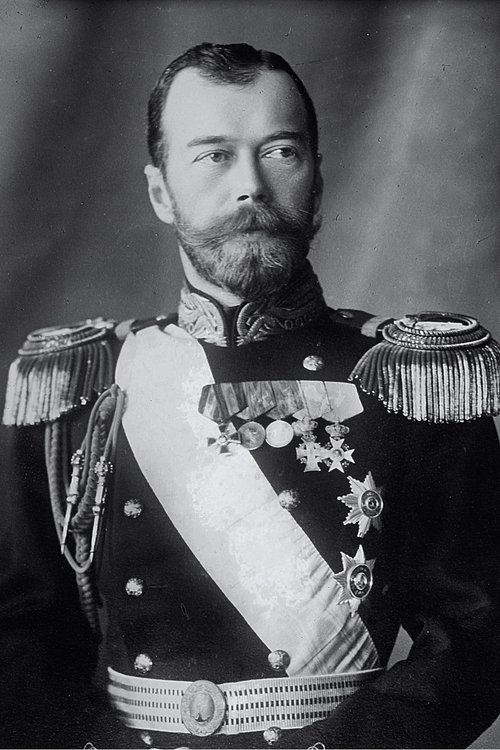
Czar Nicholas II of Russia
1 titles
Acting
May 14, 1868
Died Jul 17, 1918
Saint Petersburg, Russia
Czar Nicholas II, born Nikolai II Alexandrovich Romanov, holds the distinction of being the final Emperor of Russia, governing from November 1, 1894, until his abdication on March 15, 1917. He is revered in the Russian Orthodox Church as Saint Nicholas the Passion-Bearer. Throughout his reign, Nicholas sought to advance economic and political reforms championed by his prime ministers, promoting modernization through foreign loans and fostering a relationship with France. However, he was resistant to granting significant power to the Duma, which ultimately stifled progress.
Nicholas' commitment to autocratic governance faced strong opposition from the aristocracy and was further exacerbated by military setbacks in both the Russo-Japanese War and World War I. As dissatisfaction with his rule grew, the public's support dwindled, culminating in his abdication in March 1917. This pivotal moment marked the end of the Romanov dynasty, which had ruled Russia for over three centuries.
In addition to his political struggles, Nicholas II's reign was marked by significant events, including the 1905 Revolution and the beginning of World War I, both of which highlighted the vulnerabilities of his regime. His legacy remains a subject of extensive study, reflecting the complexities of a monarch caught between modernization and traditionalism during a time of immense change in Russia.
Nicholas' commitment to autocratic governance faced strong opposition from the aristocracy and was further exacerbated by military setbacks in both the Russo-Japanese War and World War I. As dissatisfaction with his rule grew, the public's support dwindled, culminating in his abdication in March 1917. This pivotal moment marked the end of the Romanov dynasty, which had ruled Russia for over three centuries.
In addition to his political struggles, Nicholas II's reign was marked by significant events, including the 1905 Revolution and the beginning of World War I, both of which highlighted the vulnerabilities of his regime. His legacy remains a subject of extensive study, reflecting the complexities of a monarch caught between modernization and traditionalism during a time of immense change in Russia.